


CPSC eFiling Becomes Mandatory on July 8, 2026: What U.S. Importers and Amazon Sellers Need to Know
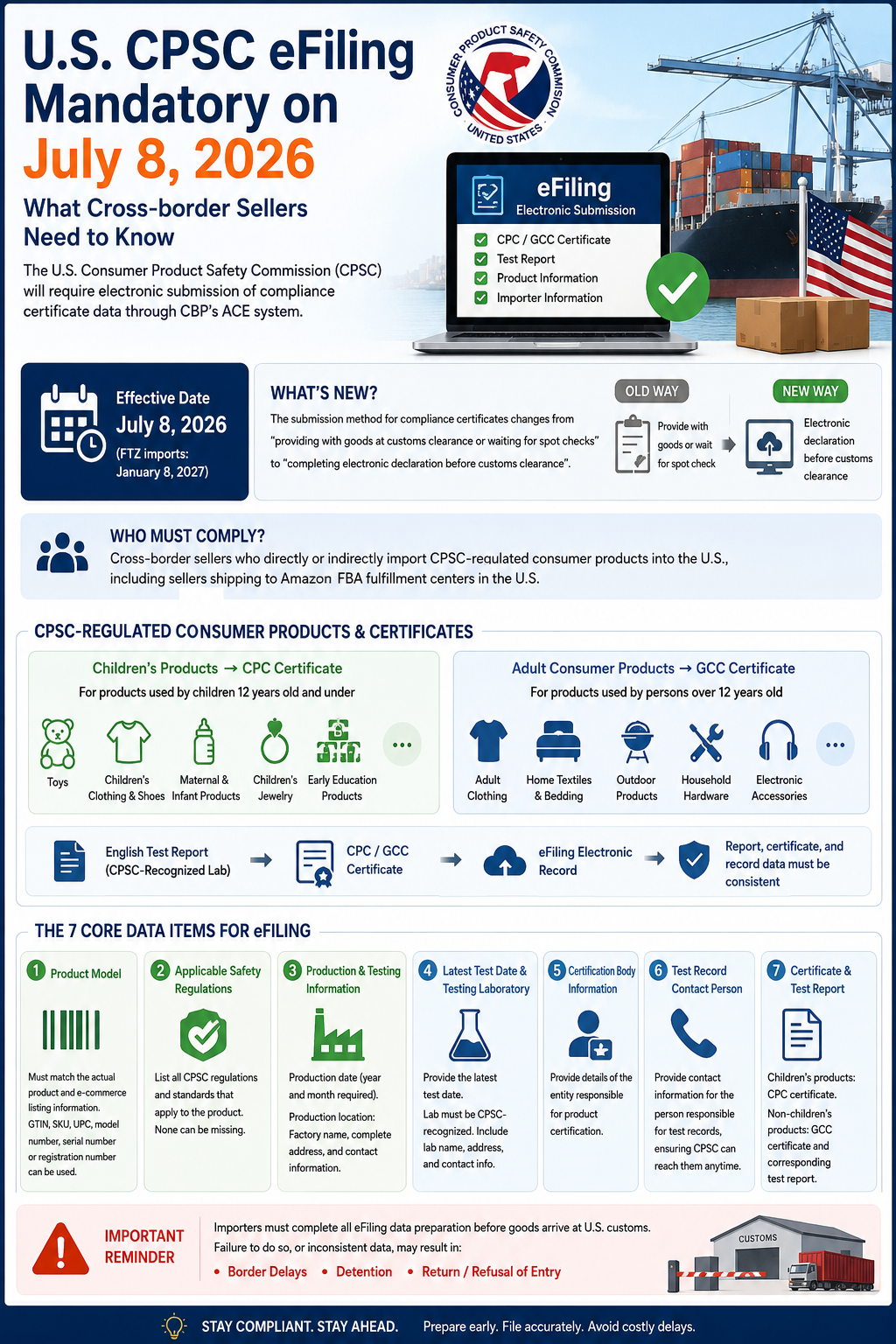
Starting July 8, 2026, the U.S. Consumer Product Safety Commission (CPSC) will officially require mandatory eFiling for regulated consumer products entering the United States.
This requirement is established under the 16 CFR Part 1110 Final Rule, shifting compliance certificate submission from paper-based documentation to electronic filing before customs clearance.
What Is CPSC eFiling?
Under the new rule, importers must submit product compliance certificate data electronically through U.S. Customs and Border Protection’s (CBP) Automated Commercial Environment (ACE) before products enter the United States.
For products imported through Foreign Trade Zones (FTZs), a six-month transition period applies, with compliance required by January 8, 2027.
Who Must Comply?
The eFiling requirement applies to:
- Importers of CPSC-regulated consumer products
- Cross-border e-commerce sellers exporting to the U.S.
- Amazon FBA sellers shipping inventory to U.S. fulfillment centers
Which Products Are Covered?
Children’s Products (CPC)
Products intended for children aged 12 and under, including:
- Toys
- Children’s apparel and footwear
- Baby and nursery products
- Children’s jewelry
- Educational products
General Consumer Products (GCC)
Products intended for general consumers, including:
- Adult apparel
- Home textiles and bedding
- Outdoor products
- Household hardware
- Plastic products
- Adult sporting goods
- Electronic accessories
Compliance Process
The standard compliance workflow includes:
- Product testing by a CPSC-accepted laboratory
- Issuance of an English test report
- Preparation of a CPC or GCC certificate
- Submission of the required information through CPSC eFiling
The test report, compliance certificate, and eFiling data must be fully consistent.
Information Required for eFiling
Importers should prepare the following seven key data elements:
- Product identification (Model, SKU, UPC, GTIN, etc.)
- Applicable CPSC safety regulations
- Manufacturing information (date and factory details)
- Testing information (test date and laboratory details)
- Certificate issuer information
- Test record custodian/contact information
- CPC or GCC certificate with the corresponding test report
What Happens If You Don’t Comply?
All required information must be submitted before the shipment arrives at U.S. Customs.
Failure to complete eFiling, or submitting inconsistent or inaccurate information, may result in:
- Customs clearance delays
- Shipment detention
- Refusal of entry or return of goods
Prepare Early
With mandatory eFiling taking effect on July 8, 2026, businesses exporting consumer products to the United States should review their compliance procedures now.
Preparing your testing documentation, CPC/GCC certificates, and eFiling data in advance will help ensure smooth customs clearance and minimize supply chain disruptions.